Oil & Gas · Analysis
Oil Markets Whipsaw as Iran Crisis Drags On, While BP Faces Investor Revolt and Lithium Deficit Looms
Oil prices edge higher amid ongoing Strait of Hormuz tensions, BP shareholders reject climate disclosure cuts, and lithium supply tightens as low prices stall new projects—three stories reshaping energy markets this week.
Stake & Paper Editorial TeamApril 24, 2026
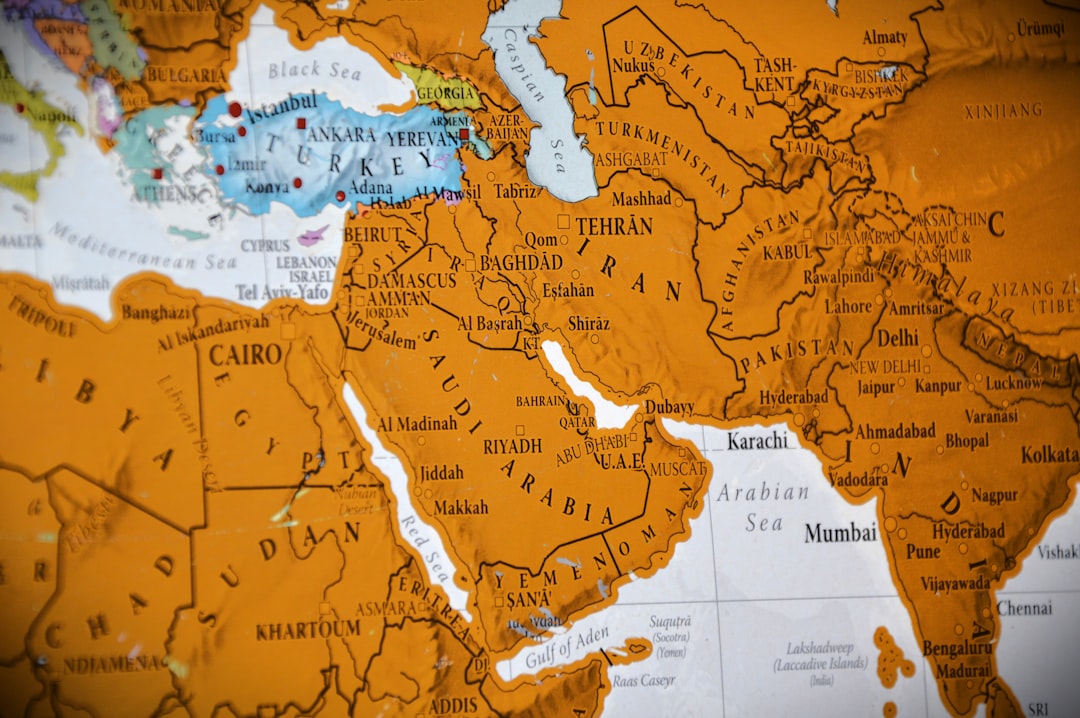
The Strait of Hormuz, a major maritime choke point for world energy trade, has been largely blocked by Iran since February 28, 2026, when the United States and Israel launched an air war against Iran, triggering what the International Energy Agency has characterized as the "largest supply disruption in the history of the global oil market."
According to market data, WTI crude traded at $71.50 per barrel on Thursday, up 0.6%, while Brent crude rose 0.5% to $75.20 per barrel—modest gains that belie the extraordinary volatility that has gripped energy markets for the past two months.
Brent crude has surged more than 55% since the Iran war began, hitting nearly $120 a barrel at its peak, with March marking one of the largest monthly oil price jumps on record as Brent gained 51%.
Yet
Iran's Foreign Minister declared the Strait of Hormuz fully open to commercial traffic on April 17, sending crude prices falling more than 10%, only for oil prices to jump again on April 20 after the U.S. Navy fired on and seized an Iranian container ship, with Iran re-imposing tighter control over the strait within hours of reopening it.
The Financial Times reported that
Iran's Islamic Revolutionary Guard Corps has launched 21 confirmed attacks on merchant ships and has reportedly laid sea mines in the strait, which until the war was open and handled about 25% of the world's seaborne oil trade and 20% of the world's liquefied natural gas.
US Shale Producers Resist Output Surge Despite Price Rally
Despite soaring oil prices, American producers are showing little appetite to dramatically ramp up production. The Financial Times reported that
U.S. shale producers are not poised to quickly ramp up production for two major reasons—strategic caution and a lack of drilled, uncompleted wells to quickly bring online, according to Rystad Energy analyst Matthew Bernstein.
Existing oil wells in the United States tend to operate at maximum capacity, so increased production requires investments in new wells, which can take months or years to produce oil given the time needed to drill, frack, and complete wells, with meaningful supply responses to price fluctuations taking six months to two years.
According to a Dallas Fed survey cited by Reuters,
domestic oil players are unlikely to increase production so long as the duration of the Iran conflict remains hard to predict, in part because sustained oil prices above $100 a barrel are far from guaranteed, while ramping up production would take time.
While prices for crude delivered in the next few weeks fluctuated wildly between $80 and $120 per barrel on March 9, the price for delivery in September has remained fairly stable at around $75–$80 per barrel, perhaps in anticipation that the supply disruption will be relatively short lived, and this price level is unlikely to produce a surge of US drilling or supply.
Europe Tallies $28 Billion Energy Bill With No Extra Supply
The European Union is confronting the economic fallout from its second major energy crisis in less than five years. According to CNN,
the European Commission said "for the second time in less than five years, Europeans are paying the price of Europe's dependency on imported fossil fuels," noting the bloc has spent an additional €24 billion ($28 billion) on energy imports since the start of the war due to higher prices—or more than $587 million a day—"without receiving a single extra molecule of energy."
The plunge in oil and natural gas supply caused by the Iran war, which has already hit Asia hard, is steadily moving west, and even if potential peace talks bring an end to the conflict this week, at least some of the damage to Europe's economy has already been done, with the European Commission stating "even if hostilities ceased immediately, disruptions to energy supplies from the Gulf will persist for the foreseeable future."
OilPrice.com reported that
the European Union has unveiled a raft of planned emergency measures to cushion its economy from soaring energy costs, with proposals announced Wednesday underscoring the economic damage the Iran war is inflicting on Europe, which only recently emerged from the energy crunch precipitated by Russia's 2022 invasion of Ukraine.
Despite gas accounting for only 18–20% of the EU's total electricity generation, it disproportionately drives power costs due to the region's marginal pricing market design, and when the TTF benchmark spikes, day-ahead electricity prices in gas-reliant nations like Italy and Germany soar, reaching €120–150/MWh.
BP Suffers Shareholder Revolt Over Climate Transparency
British oil major BP faced a stinging rebuke from investors at its annual general meeting on Thursday. CNBC reported that
BP suffered a shareholder revolt at its annual general meeting, following a tense clash with investors over corporate governance and climate transparency, as the energy major pivots back to its core business of oil and gas and away from renewables, failing to get majority shareholder approval on two highly anticipated motions which would have permitted online-only AGMs and retired two company-specific climate disclosure obligations, with each resolution receiving around 47% support, far short of the required 75% required to pass.
The Financial Times reported that
ahead of the AGM, BP's board blocked a motion tabled by Dutch activist group Follow This that would have required the company to share plans on creating value for shareholders under future scenarios of falling oil and gas demand, a contentious decision that had raised eyebrows among some investors, with two influential proxy advisers, Glass Lewis and ISS, and one of Europe's biggest asset managers, Legal & General Investment Management, recommending shareholders vote against BP's wishes.
A majority of 81.8% voted in favor of electing Albert Manifold as chair, with his election in sharp focus following the board's move to block the Follow This proposal, though board members require 50% of the vote to be elected and typically receive close to 100% support.
Lithium Market Tightens as Investment Drought Bites
While oil dominates headlines, a quieter crisis is brewing in battery metals. OilPrice.com reported that
Canaccord analysts expect to see a "material market deficit" starting in 2026, given that tightening supply has more than offset the weakness in near-term demand.
Lithium carbonate prices in Asia rose more than 90 percent from lows seen in October, while spodumene concentrate surged even further, reflecting upstream constraints, with the rally driven by a combination of factors including stronger-than-expected "first-use" demand from cathode and battery makers, supply disruptions in key producing regions and policy-driven demand pull-forward linked to changes in China's VAT rebate on battery exports.
The closure of the Jianxiawo lithium mine in China, a single mine operated by battery giant CATL that is responsible for an estimated 6% of the world's total lithium supply, sent an immediate shockwave through the market and has been a critical factor underpinning the recent price surge, with its recent shutdown stemming from delays in renewing its operating license, highlighting how concentrated the supply chain is and how the removal of even one key producer can have an outsized impact on global prices.
The severe price depression between 2022 and 2024 had a chilling effect on capital investment, with low prices making new projects economically unviable and investment in new mining and refining capacity stalling, creating a critical lag in the supply chain and setting the stage for a significant structural deficit projected to emerge by 2026.
According to market data, Henry Hub natural gas prices fell 2.4% to $3.25 per MMBtu on Thursday, as Natural Gas Intel reported that
the benchmark price for natural gas in Europe has risen significantly this month, putting it on track for the largest monthly gain in several years, while Europe's starting position is fragile, with overall underground gas storage notably lower than the level recorded at the same time last year and beneath the multi-year seasonal average.
The confluence of geopolitical turmoil, investor pressure on climate strategy, and critical mineral shortages is reshaping the energy landscape in ways that will reverberate for years—regardless of how quickly the Strait of Hormuz crisis resolves.